
1. What is this in a sentence?
Customers often face a difficult decision when they see various price points for a product or service, unsure of which choice represents the best value.
2. What is it to businesses?
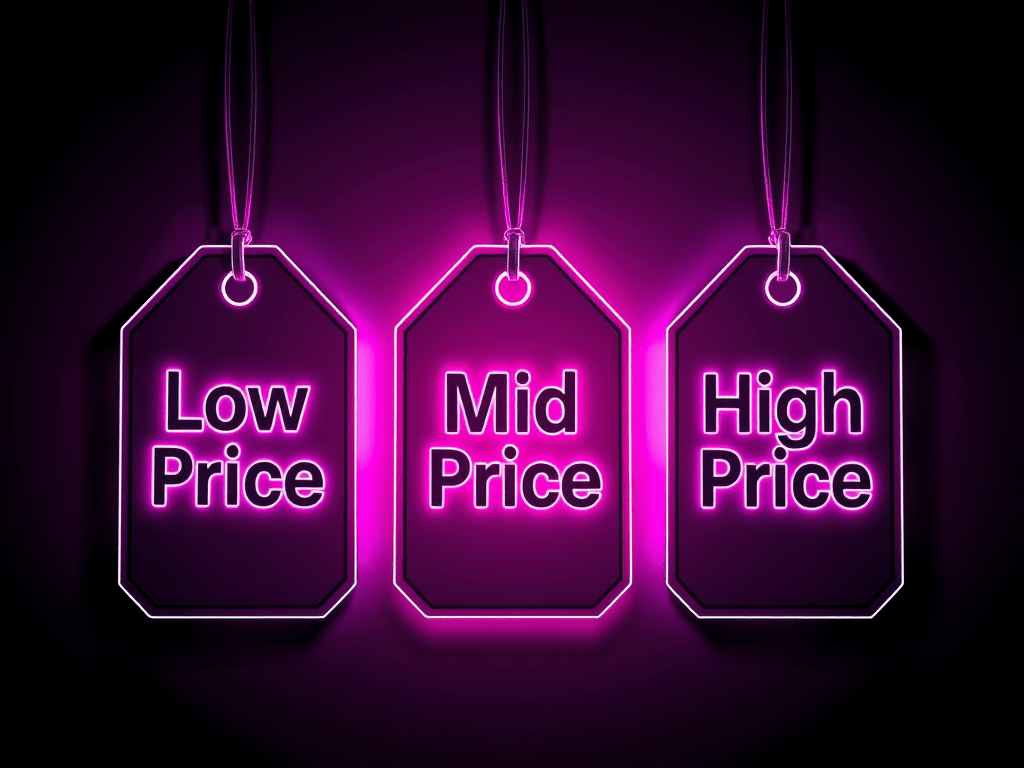
Price anchoring is a strategy where companies display multiple price options to influence a customer’s perception of value. By presenting a “high,” “medium,” and “low” pricing structure, businesses can nudge customers towards a specific choice—often the middle option—as it feels like a balanced blend of quality and affordability. This technique leverages human psychology, as people tend to avoid extremes and seek out options that seem “just right.”
3. Customer opportunity
For customers, price anchoring can create a clearer pathway to deciding on a purchase, as they’re subtly guided towards a product that feels like good value without the regret of overpaying or skimping. The middle price point often appeals because it implies better quality than the cheapest option, yet more value than the most expensive.
4. Business threat
If not done correctly, price anchoring can backfire. Customers may feel manipulated if they sense the lower-priced or higher-priced options are there only to push them towards the mid-range choice. Additionally, competitors with simpler or more transparent pricing structures could attract value-conscious customers who don’t want to deal with pricing games.
5. Real business examples
1. Apple’s iPhone Pricing
Apple has used price anchoring effectively by offering multiple models of iPhones at different prices—usually a base model, a mid-range model, and a premium model. The mid-range model typically has enhanced features compared to the base, yet isn’t as costly as the premium model, leading many customers to choose it as the best balance between performance and cost.
2. Newspaper Subscription Plans
Many newspaper and magazine publishers offer tiered subscription plans to guide customers towards a higher-value choice. For instance, a publisher might offer three options: digital-only access for £9.99/month, print-only for £14.99/month, and a combined print and digital subscription for £19.99/month. The combined option feels like a good deal because customers perceive they’re getting both versions for just a bit more than the print-only option, steering many readers to choose the £19.99 plan.
6. Businesses can use data analytics to refine and optimise price anchoring strategies by:
1. Tracking Purchase Behaviour
Analyse how customers interact with different price tiers to identify the most popular choices and adjust pricing to further drive traffic to the desired option. For example, if fewer people are selecting the middle tier than expected, you might need to adjust the perceived value of that option.
2. A/B Testing Price Options
Experiment with different price points and product combinations to find the optimal balance. By testing how varying anchor prices (e.g., changing the “high” price) impact the popularity of the mid-range option, businesses can improve conversion rates.
3. Segmenting by Customer Demographics
Use customer data to create tailored price tiers that resonate with specific segments. For instance, younger customers might prefer digital-first options, while older customers might favour print or combined packages. Pricing can be adjusted to reflect these preferences.
4. Monitoring Competitor Pricing
Continuously track competitors’ pricing structures to ensure your anchoring strategy remains compelling and competitive in the marketplace.
5. Evaluating Customer Feedback
Collect qualitative and quantitative data from customers about their perception of pricing options. This helps you fine-tune the perceived value of each tier and address any concerns about fairness or transparency.
By leveraging data, businesses can make pricing strategies dynamic, customer-centric, and maximally effective at guiding purchase decisions.
Are you utilising this effect in your business?




 BrighterDataMinds.com
Leave a reply to Myrna Cancel reply