1. What is it, in one sentence
Omission bias is our tendency to judge harm caused by taking action as worse than the same harm caused by doing nothing.
2. What it means to businesses
Customers don’t just weigh up whether a product is good. They weigh up whether they’d feel to blame if it went wrong. Buying something and regretting it feels like their fault. Not buying and missing out feels like bad luck.
So inaction becomes the comfortable default. That means abandoned baskets, put-off upgrades and customers who stay with a mediocre supplier. It happens inside your own company too, where “let’s wait and see” rarely gets anyone fired.
3. Customer opportunity
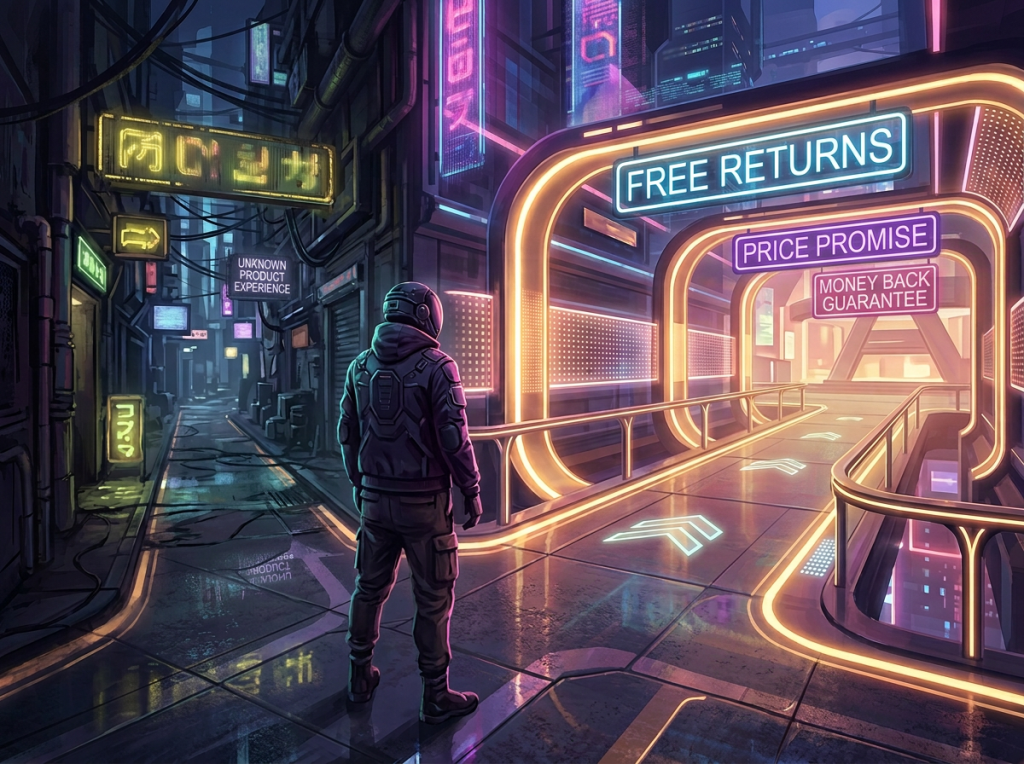
Make acting feel safe. Shrink the fear of “my fault” and the decision gets easier. Free returns, trials, guarantees and clear reassurance all work this way. Your customer isn’t being pushed. The risk of saying yes just feels smaller than the risk of staying put.
You can also win share from rivals whose customers are sitting still. Most of them aren’t loyal, just cautious. Make switching feel simple and blame-free.
4. Business threat
Push too hard and you get backlash. Customers who feel manipulated into acting will blame you, which is exactly the feeling they were avoiding. Using this bias to lock people into subscriptions they struggle to leave erodes trust fast.
The bigger threat is internal. If your own teams favour inaction, you’ll be slow to fix problems, change prices or pull a faulty product.
5. Business examples
- General Motors: The company’s handling of the ignition switch fault is a well-documented case of delay. It took years to recall affected cars and ended up in a major legal settlement. Waiting felt safer than the visible cost of acting.
- Zappos: The online shoe retailer built its name on generous free returns. Buying shoes without trying them on is risky. Removing the cost of a wrong decision made clicking “buy” the easier choice.
- Warby Parker: Its home try-on programme sends customers a handful of frames to test before buying. A choice that might feel like a regrettable mistake becomes a low-risk trial.
6. How can we use data to maximise this effect
- Find the hesitation points: Use funnel analytics to see where customers stall, such as product page to basket, or basket to payment. Big drop-offs often signal fear of choosing wrongly.
- A/B test risk reducers: Test returns messaging, guarantees and trial offers against a control. Measure conversion rate, average order value and return rate together, so you don’t win sales and lose margin.
- Ask directly: Run short exit surveys on abandoned baskets with options like “worried I’d choose wrong” or “wanted to compare more”. Reasons given in the customer’s own words show whether risk or price is the blocker.
- Track the cost of waiting: Look at repeat purchase and renewal data for customers who delay. Compare the segment who act at the first prompt with those who don’t, and test nudges to the second group.
When is it best to use this technique for retailers
- High-regret categories: Use it for items where being wrong feels costly, such as clothing fit, electricals, furniture, skincare and gifts. Free returns and “try before you buy” suit these best.
- New products or unfamiliar brands: Reassurance matters most when customers have no past experience to lean on.
- Peak season and gifting: Last-minute buyers fear a wrong choice most. Clear return windows and gift receipts help them commit.
- Avoid it for low-cost, routine purchases: Nobody agonises over a pint of milk. Don’t hide cancellation or subscription exits either, because trapped customers turn into vocal critics.
Think of omission bias as the customer’s inner “what if I get it wrong?” voice. Don’t shout it down, just hand it a safety net, and most people will take the leap on their own.


Leave a Reply