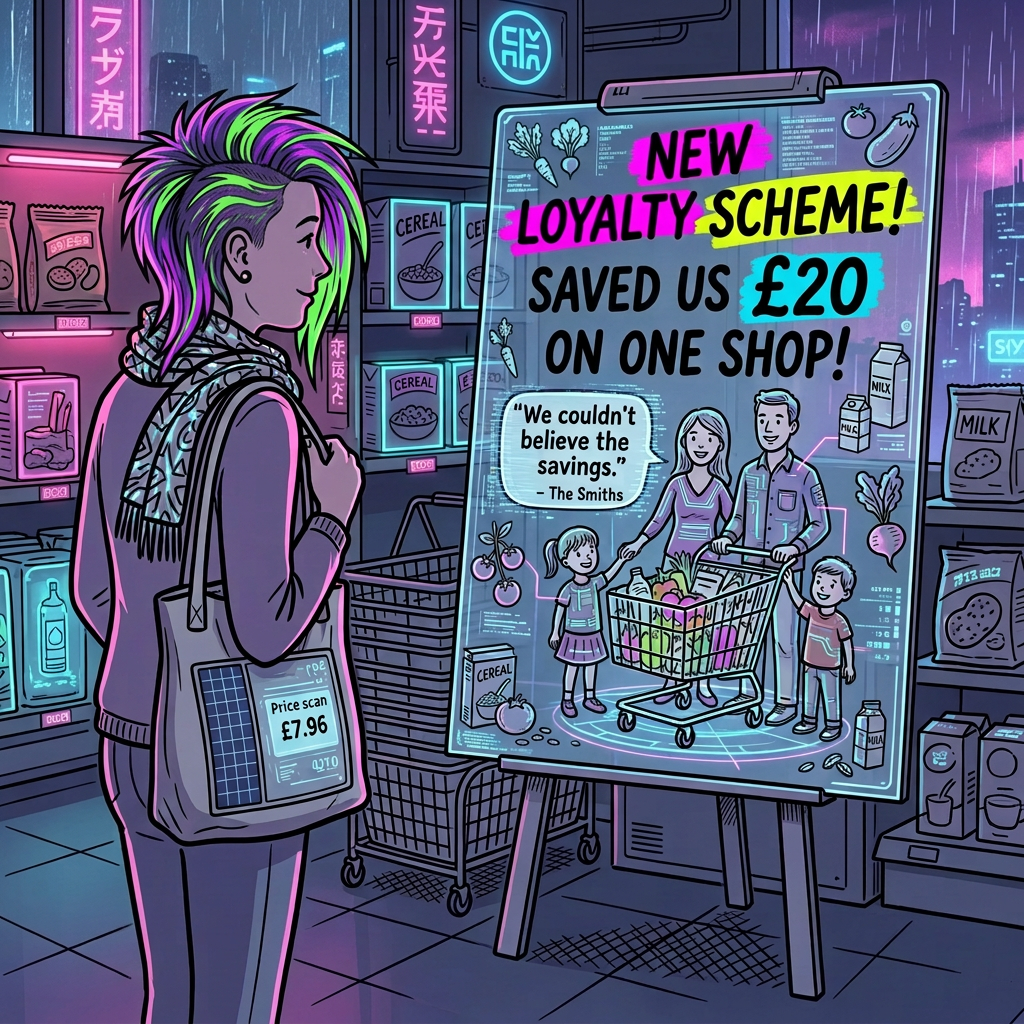
1. What is this in one sentence?
The Identifiable Victim Effect is a psychological bias where people are more likely to care, empathise and take action when they see the story of a specific individual rather than a large group or abstract statistic.
2. What it means to businesses
Humans are hardwired to connect with people, not numbers. When businesses communicate through percentages, averages and large-scale problems, the message can feel distant. But when they introduce a real person, customer or employee, the issue becomes tangible and emotionally engaging.
For retailers, this means that showcasing a single customer’s experience can often be more persuasive than presenting survey results about hundreds or thousands of shoppers.
Instead of saying:
“85% of customers found our service helpful.”
Say:
“Kari saved £200 on her family’s weekly food bill after switching to our loyalty programme.”
The second approach creates an emotional connection alongside the rational benefit.
3. Customer Opportunity
The biggest opportunity is building trust and relatability.
Customers constantly ask themselves:
“Is this relevant to me?”
When they see someone like them solving a problem, they can instantly visualise the outcome.
Retailers can use the effect to:
- Increase conversion rates through customer testimonials.
- Improve engagement in loyalty programmes.
- Make social impact initiatives feel more meaningful.
- Bring category benefits to life through real customer stories.
- Strengthen emotional connections with the brand.
The effect works particularly well when:
- Launching new products.
- Promoting value and savings.
- Supporting charity partnerships.
- Demonstrating lifestyle improvements.
- Encouraging customer sign-ups or subscriptions.
4. Business Threat
Like many behavioural science principles, the Identifiable Victim Effect has a downside. Businesses can become overly reliant on a single story that is not representative of reality. This creates several risks:
Confirmation Bias. One customer success story may hide broader customer dissatisfaction.
Loss of Credibility. If customers feel a story has been exaggerated or manipulated, trust can quickly disappear.
Poor Decision Making. Leadership teams can prioritise emotional anecdotes over robust insight and data.
Ethical Concerns. Using vulnerable individuals purely for commercial gain can damage brand reputation.
The best retailers balance emotional storytelling with evidence. A compelling customer story should support the data, not replace it.
5. Business Examples of This Effect
Tesco Clubcard Savings Stories
Rather than simply highlighting the number of members saving money through Clubcard pricing, Tesco often uses real customer examples that demonstrate how a family benefits from weekly savings.
The individual story makes the value proposition easier to understand and more memorable than a percentage saving statistic. This makes savings feel real and achievable.
Dove’s Real Beauty Campaign
Dove transformed a broad conversation about self-esteem into a series of individual stories featuring real women.
Instead of discussing beauty standards at a societal level, campaigns focused on personal experiences and emotional journeys. This creates strong emotional engagement and brand differentiation.
Macmillan Cancer Support Fundraising
One reason Macmillan’s fundraising campaigns are so successful is their use of individual patient stories.
Rather than leading with national cancer statistics, they often tell the story of one person’s experience navigating treatment and recovery. This increases empathy and donation intent.
6. How can we use data to maximise this effect?
The smartest retailers use data to identify which stories deserve the spotlight. The challenge is to find Your Most Relatable Customers. Use customer segmentation to identify:
- Families
- Retirees
- Students
- First-time buyers
- High-value customers
Then tell stories that resonate with each audience.
Link Stories to Measured Outcomes. Every customer story should be supported by evidence. For example:
“Kari reduced her weekly grocery spend by £15 using our loyalty programme.”
Data validation:
“Members save an average of £12 per week.”
The story draws attention. The data builds trust.
Identify Which Stories Drive Behaviour. Measure the impact of:
- Testimonials
- Case studies
- Customer videos
- Review content
- Social media stories
Track outcomes such as:
- Click-through rate
- Conversion rate
- Basket size
- Repeat purchase rate
- Loyalty sign-ups
This allows retailers to understand which customer stories genuinely influence behaviour.
Use Customer Insight to Match Story to Audience. Different customer groups respond to different situations. A young family may react strongly to budgeting stories. A premium shopper may engage more with quality and service stories. Insight teams should identify the emotional triggers most relevant to each segment.
Combine Quantitative and Qualitative Insight. The winning formula is: Data tells you what is happening. Stories tell you why people care.
Retailers that combine both achieve the strongest outcomes.
The Identifiable Victim Effect is not really about victims. It’s about people. Customers rarely buy because of a statistic. They buy because they can see themselves in someone else’s story. For retailers, the technique is most effective when launching propositions, communicating value, driving behavioural change or supporting social causes. The key is ensuring that every compelling story is backed by robust customer insight and data.The lesson is simple: lead with a person, validate with data, and you’ll usually achieve far greater impact than relying on numbers alone.


Leave a comment